The World Economic Forum asked 1,200 experts under its annual Global Risks Perception Survey to rank the most severe short- and long-term risks, and they identified the cost-of-living crisis as the most severe immediate risk but saw the failure to mitigate the climate crisis as the biggest risk 10 years from now.
SUSTAINABLE & CLEAN ENERGY | ENERGY EFFICIENCY | LOW CARBON DEVELOPMENT | CLIMATE CHANGE | ___________ TECHNOLOGY | POLICY | INVESTMENT
Monday, January 16, 2023
Saturday, December 31, 2022
The agreement on the EU Emissions Trading System and the Social Climate Fund
The European Council and the European Parliament reached a provisional political agreement on legislative proposals of the ‘Fit for 55’ package that will allow the EU to reduce its net greenhouse gas emissions by at least 55% by 2030 compared to 1990 levels and to achieve climate neutrality in 2050 while making sure the most vulnerable citizens and micro-enterprises are effectively supported in the climate transition.
Thursday, January 6, 2022
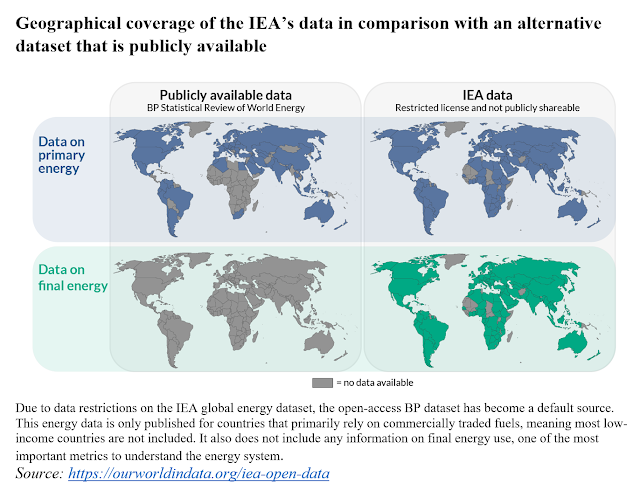
IEA plans to make all its data freely available
International Energy Agency (IEA) IS GOING TO FREE ITS ALL GLOBAL ENERGY DATA, Quantum Commodity Intelligence informed today. This will significantly improve data transparency in the energy sector as the world prepares to reduce dependency on fossil fuels and move towards a low-carbon future.
The proposal still needs to be supported by member countries at the next ministerial meeting to be held 2-3 February.
Wednesday, December 15, 2021
The largest in the world carbon capture plant is build in Iceland
The largest in the world “direct air capture” (DAC) plant will allow to capture and remove annually from the atmosphere the amount of carbon dioxide equivalent to emissions produced by 870 cars. CO2 is filtered out, mixed with water, and pumped into deep underground wells, where over the course of a few years it turns to stone. The plant was opened in September 2021 in Iceland, and it is operated by the Swiss engineering startup Climeworks.
Tuesday, November 23, 2021
EU funds the energy efficiency improvements in buildings
Around EUR 25 billion have been allocated in energy efficiency investments in buildings from EU funds over the period 2014-2020, while more than half of these fundings (EUR 12.7 billion) have been invested in the public sector, according to the recent JRC report " Financing energy renovations at local and regional levels. European status and good practices".
Source: https://lnkd.in/ghf8kAK9
Wednesday, September 15, 2021
Global pandemic caused the decrease of U.S. primary energy consumption by 7% in 2020
U.S. primary energy consumption in 2020 was 92.9 Quads, significantly dropping from 100.2 Quads in 2019.
The contribution of renewable energy sources exceeded 12%, while fossil fuels (natural gas, oil, and coal) made up 79%, and nuclear - 9%.
Tuesday, August 10, 2021
IPCC: major climate changes are inevitable and irreversible
The AR6 Climate Change 2021: The Physical Science Basis, is a result of eight years of hard work of hundreds of experts and peer-review studies. It represents the world’s full knowledge to date of the physical basis of climate change and found that human activity was “unequivocally” the cause of rapid changes to the climate, including sea level rises, melting polar ice and glaciers, heatwaves, floods, and droughts.
Human influence has warmed the climate at a rate unprecedented in at least the past 2000 years
Thursday, June 17, 2021
Current NDCs submission status under the Paris Agreement
Under the Paris Agreement, Parties must submit Nationally Determined Contributions (NDCs) to the UNFCCC and to introduce policies aiming the achievement of their stated objectives. The first round of NDCs, submitted by 191 countries, covers more than 90% of global energy‐related and industrial process CO2 emissions.
As of 23 April 2021, 80 countries have submitted new or updated NDCs to the UNFCCC, covering just over 40% of global CO2 emissions.
Still, just a few percent of the global net zero emission targets currently are supported by law (see figure below).
Source: IEA, 2021
Sunday, May 30, 2021
IEA proposes technological and policy pathways allowing transition to a net zero energy system by 2050
The energy
sector is the source of about 75% of GHG emissions today and holds the key to
preventing the worst effects of climate change.
In its
recent report NET ZERO BY 2050: A ROADMAP FOR THE GLOBAL ENERGY SECTOR,
IEA proposes technological and policy pathways allowing transition to a net zero energy system by 2050 while ensuring stable and
affordable energy supplies, providing universal energy access, and enabling
robust economic growth.
The path to net-zero emissions is challenging: staying on it requires immediate and intensive deployment of all available clean and efficient energy technologies.
Saturday, April 17, 2021
IRENA presented the outline of World Energy Transitions Outlook till 2050
Recently published preview of IRENA’s World Energy Transitions Outlook presents an outline of the global strategies towards carbon-neutrality and leads way to a climate-safe 1.5°C pathway by 2050.
It is projected that over 70% of all
decarbonization solutions will involve renewable energy through the direct
supply of low-cost power, efficiency, renewable-powered electrification in
end-use. Carbon capture and removal technologies in combination with bioenergy
will deliver the ‘remaining reductions towards a net-zero energy system.