There are clear imbalances in the global climate finance flow. Vast majority of the flows go to advanced economies and East Asia and Pacific region (mostly to China) – near 85% of the total $1415 bn private and public financing.

There are clear imbalances in the global climate finance flow. Vast majority of the flows go to advanced economies and East Asia and Pacific region (mostly to China) – near 85% of the total $1415 bn private and public financing.

"U.S. energy consumption was higher than U.S. energy production in every year from 1958–2018. The difference between consumption and production was met by imports, particularly crude oil and petroleum products such as motor gasoline and distillate fuel oil. Total energy imports (based on heat content) peaked in 2007 and subsequently declined in nearly every year since then. Increases in U.S. crude oil and natural gas production reduced the need for crude oil and natural gas imports and contributed to increases in crude oil and natural gas exports. The United States has been a net total energy exporter—total energy exports have been higher than total energy imports—since 2019."
Source: EIA, 2024.

Following are the 8 key questions answered in the WRI's article:
1) What Is Loss and Damage?
"Battery storage in the power sector was the fastest growing energy technology in 2023 that was commercially available, with deployment more than doubling year-on-year. Despite the continuing use of lithium-ion batteries in billions of personal devices in the world, the energy sector now accounts for over 90% of annual lithium-ion battery demand."

About 85% of additional electricity demand through 2026 is set to come from developing economies, with China contributing substantially even as the country’s economy undergoes structural changes.

The countries with significant CO2 emissions are mapped on diagram below depending on their GDP per capita and carbon intensity per unit of GDP.

According to International Energy Agency (IEA), heat pumps may reduce global CO2 emissions by 500 Mt by 2030 , or around 40% of total direct and indirect emissions reductions in space and water heating in buildings.

Battery EV is 3.3 times more efficient comparing with hydrogen fuel cell vehicle and 5.6 times more efficient than conventional internal combustion vehicles if renewable electricity is primary energy source.

The 28th conference under the United Nations Framework Convention on Climate Change (UNFCCC) came at a critical moment in time, with 2023 set to be the warmest year on record and the impacts of climate change rapidly accelerating. International climate change negotiations at the COP28 conference in Dubai concluded on 13 December 2023.

Below are the main outcomes and failures of the COP 28:

Czech Republic, Finland, Germany, Netherlands, and Sweden are among those EU countries who achieved the success in growing their economies and, at the same time, reducing CO2 emissions during last 30 years.


The Government of Canada will not provide fossil fuel subsidies unless they meet one or more of the following criteria:
- Enable significant net GHG emissions reductions in Canada or internationally in alignment with Article 6 of the Paris Agreement.
- Support clean energy, clean technology, or renewable energy.

The World Economic Forum asked 1,200 experts under its annual Global Risks Perception Survey to rank the most severe short- and long-term risks, and they identified the cost-of-living crisis as the most severe immediate risk but saw the failure to mitigate the climate crisis as the biggest risk 10 years from now.

The European Council and the European Parliament reached a provisional political agreement on legislative proposals of the ‘Fit for 55’ package that will allow the EU to reduce its net greenhouse gas emissions by at least 55% by 2030 compared to 1990 levels and to achieve climate neutrality in 2050 while making sure the most vulnerable citizens and micro-enterprises are effectively supported in the climate transition.

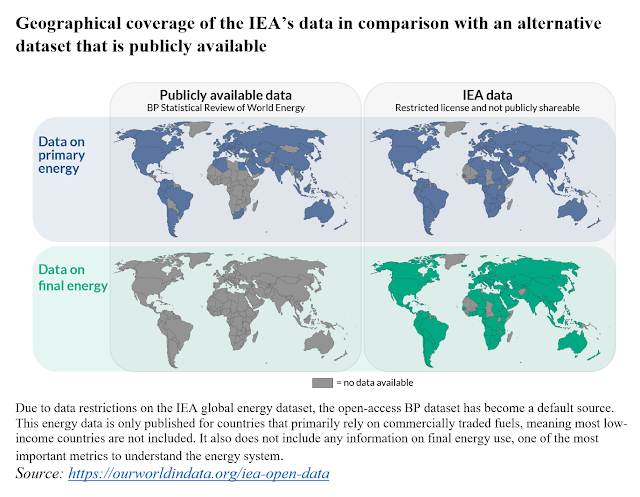
International Energy Agency (IEA) IS GOING TO FREE ITS ALL GLOBAL ENERGY DATA, Quantum Commodity Intelligence informed today. This will significantly improve data transparency in the energy sector as the world prepares to reduce dependency on fossil fuels and move towards a low-carbon future.
The proposal still needs to be supported by member countries at the next ministerial meeting to be held 2-3 February.
The largest in the world “direct air capture” (DAC) plant will allow to capture and remove annually from the atmosphere the amount of carbon dioxide equivalent to emissions produced by 870 cars. CO2 is filtered out, mixed with water, and pumped into deep underground wells, where over the course of a few years it turns to stone. The plant was opened in September 2021 in Iceland, and it is operated by the Swiss engineering startup Climeworks.

Around EUR 25 billion have been allocated in energy efficiency investments in buildings from EU funds over the period 2014-2020, while more than half of these fundings (EUR 12.7 billion) have been invested in the public sector, according to the recent JRC report " Financing energy renovations at local and regional levels. European status and good practices".

Source: https://lnkd.in/ghf8kAK9
U.S. primary energy consumption in 2020 was 92.9 Quads, significantly dropping from 100.2 Quads in 2019.

The contribution of renewable energy sources exceeded 12%, while fossil fuels (natural gas, oil, and coal) made up 79%, and nuclear - 9%.
